Earth's Great Rivers II
BBC STUDIOS
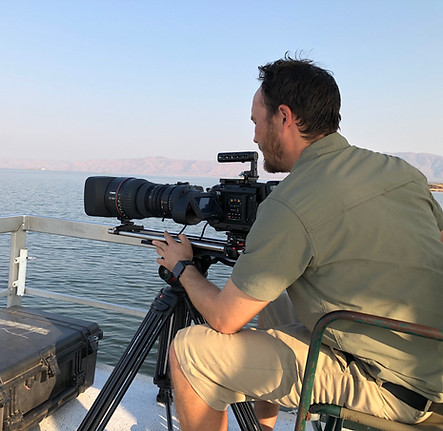
I filmed Earth’s Great Rivers II during the height of Covid, when international crews simply weren’t able to travel and work as they normally would. So for these shoots, it was just me operating camera, with Micaela Hamilton field producing.
We worked on two sequences for the Zambezi Episode.
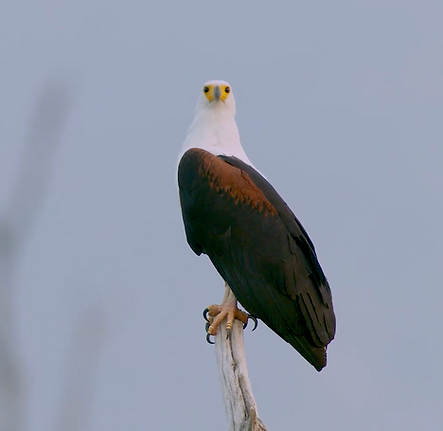
Fish Eagle - Lake Kariba
The first was on Lake Kariba, filming African fish eagles. Because of the birds’ behaviour — and Kariba itself — almost the entire shoot had to be conducted from a boat.
Filming a hunting fish eagle from a moving boat is not quite as straightforward as it sounds. Between constantly avoiding submerged tree stumps, dealing with wind and waves, and trying to keep a long lens steady while a bird suddenly launches into a hunt, was a completely new kind of challenge.
We spent ten days on the lake following the eagles, and by the end of it I had developed some pretty decent sea legs, or lake legs, I suppose.
Elephants in Reception - Zambia
From Kariba, we travelled to Zambia for a very different sequence at Mfuwe Lodge in South Luangwa. The lodge is famous for a remarkable annual event: during mango season, wild elephant families walk straight through the reception area to reach the wild mango tree in the courtyard.
Of course, wildlife rarely works to a production schedule.
The elephants — and the mangoes — made us wait. Day after day we sat ready, hoping that this would finally be the moment they decided to come through. And then we waited some more.
Eventually, after nearly two weeks, a small herd finally wandered through the lodge and we were able to capture the sequence we had travelled there for.
There are definitely worse places to spend two weeks waiting for elephants. Between the lodge, the staff and the food, I probably left carrying a few extra kilograms, but absolutely no complaints from me.
Our producer, Andrew Murray, directed the shoot remotely throughout, which was another slightly surreal part of working during Covid. Despite the circumstances, it turned into a really memorable production and a reminder that sometimes natural history filmmaking is less about chasing the action and more about simply being prepared to wait for it.
STILLS FROM THE SHOOT